U.S. studying 34-year sentence of activist Salma al-Shehab in Saudi Arabia -State Dept
WASHINGTON, Aug 17 (Reuters) - The United States is studying the case of women's rights activist Salma al-Shehab, who was sentenced to 34 years in prison in Saudi Arabia, the State Department said on Wednesday.
"Exercising freedom of expression to advocate for the rights of women should not be criminalized, it should never be criminalized," State Department spokesperson Ned Price told reporters.
Register now for FREE unlimited access to Reuters.com
Reporting by Simon Lewis and Rami Ayyub; Writing by Daphne Psaledakis; Editing by Mark Porter
Our Standards: The Thomson Reuters Trust Principles.
Thanks for watching our article U.S. studying 34-year sentence of activist Salma al-Shehab in Saudi Arabia -State Dept | Reuters. Please share it with kind.
Source: news.google.com
U.S. studying 34-year sentence of activist Salma al-Shehab in Saudi Arabia -State Dept | Reuters. There are any U.S. studying 34-year sentence of activist Salma al-Shehab in Saudi Arabia -State Dept | Reuters in here.
The race in five charts.
President Joe Biden just signed into law the biggest clean energy investment in U.S. history. It includes nearly $370 billion in subsidies for U.S. solar and wind energy development, electric vehicles, and much more.
After decades of Democrats struggling — and failing — to rally political support for serious climate action, the bill is a big step forward for the U.S. Critically, it brings the country closer to meeting its 2030 emissions reduction target. But Congress also had economic and geopolitical aims in passing the legislation: namely, catching up with a rival superpower.
Hear more from Lili Pike about this story:
China occupies a paradoxical place when it comes to the global fight against climate change. On the one hand, the country is perhaps best known as by far the world’s largest consumer of coal and the world’s largest emitter of carbon dioxide. On the other, China has emerged in the last decade as a global clean energy champion — with the help of government support on a grand scale. In total, between the private and public sectors, China invested $380 billion in clean energy in 2021, more than any other country. Beyond the sheer amount of money, the country has proven that solar and wind plants can be built at a massive scale and rapid speed. And the country has reaped economic rewards for its foresight: Chinese companies now dominate many of the clean energy industries that the world is finally embracing in the fight against climate change.
Loading...
Now the U.S. is embarking on a crucial mission of climate investment catch-up. As Washington prepares to unleash its long-awaited climate spending, these charts show the gap between the U.S. and China when it comes to clean energy. The U.S. sees closing that gap as critical for the climate, geopolitical leadership and the future of the American economy.
How China surpassed the U.S. on renewables
China’s top rank in clean energy investment and production is the result of more than a decade of cutthroat entrepreneurship and government subsidies. The initial drivers of China’s solar industry were actually subsidies and incentives offered by other governments — Germany’s in particular. Then, in the wake of the 2008 global financial crisis, the Chinese government decided to invest in building these alternative energy sources at home.
At the time, Chinese people were increasingly worried about the air pollution that China’s coal plants were belching; in major cities, the air quality had become a problem the government couldn’t sweep under the rug. Renewables were an appealing substitute, and they also held economic promise.
“There was both a climate and a pollution drive there,” said Ilaria Mazzocco, a fellow at the Center for Strategic and International Studies who focuses on Chinese energy policy. “But also I think, maybe even more importantly, these were industries that the government saw as strategic.”
The Chinese government set targets for wind and solar capacity, extended credit lines to the private companies that largely dominate the sectors, and put in place subsidies to allow these clean energy sources to compete with cheaper coal-generated power.
In the decade since, those government policies have paid enormous dividends: Solar and wind energy production has taken off. Last year, China accounted for nearly half of new global renewable energy capacity, and the country recently built the world’s largest solar plant — a vast array of solar panels carpeting the desert in China’s Qinghai province. 2022 is expected to be another banner year, with projections suggesting new solar capacity could double to a record high.
Loading...
Progress in the U.S. looks modest by comparison. American solar and wind tax credits in the U.S. have led to growth in solar and wind, but overall financial and regulatory support for renewable electricity generation has been higher in China. And efforts to speed the U.S. transition to clean electricity through stronger regulation, such as President Obama’s Clean Power Plan, were thrown out under the Trump administration.
The difference between the two countries’ green energy growth is clear in another metric: the share of electricity generated from renewables. China’s renewable electricity share leapt from 16 percent in 2005 to 28 percent in 2021; in the U.S., the share of electricity derived from renewable sources remains lower than in China.
Loading...
Of course, it’s important to note that other trends in China haven’t been nearly as climate-friendly: Coal is still king when it comes to energy and electricity generation — powering China’s steel mills, cement production, and factories. The country’s carbon dioxide emissions have actually climbed in the last few years to a new high in 2021, as a result of a pandemic-induced stimulus that briefly stoked construction (and the production of those carbon-intensive materials, steel and cement, that go into construction).
But China’s clean energy trend is still a significant climate story. “China continues to have a massive challenge ahead of it, because of its reliance on coal,” Mazzocco told Grid. “But what we are seeing is a record build-out of renewable energy and the infrastructure that supports the energy transition. The trends point to the fact that China may end up building enough renewable energy to actually start supplanting the coal, which is actually really good news.”
China has zoomed ahead of the U.S. on electric cars, too
Along with solar and wind, China is now the undisputed leader when it comes to electric vehicles as well. Just as China was quick to support its renewable energy industries, the government also placed an early bet on electric vehicles. Over the past decade, the Chinese government has provided more than $100 billion to what it calls the “new energy” vehicle industry (which includes electric and hydrogen fuel cell vehicles). This includes generous subsidies and tax rebates for buyers.
China had never been able to outcompete foreign manufacturers in the conventional auto industry, but the EV business offered a fresh opportunity. “There was a clear interest in promoting a new type of technology,” Mazzocco said, “with the thought that would help Chinese manufacturers leapfrog Western and other global multinationals.”
2021 was a breakout year for electric vehicles in China, with 3.3 million sold in the country alone – half of the global total. That amounted to 16 percent of car sales in China. Meanwhile, in the U.S., consumers have had access to electric vehicle tax credits, but the subsidies have been less generous. Electric car sales reached just 5 percent of total U.S. auto sales in 2021.
Loading...
Green tech: Made in China vs. Made in the USA
The boom in China’s renewable energy industries has set off alarm bells in Washington. And those alarm bells were an important driver for the new legislation.
China has developed a huge market for clean energy products by creating so much domestic demand for wind, solar, electric vehicles and other climate-friendly technologies. The result is that China has also become a manufacturing hub for green technologies — some of which are exported globally. Electric vehicle battery components and solar panels are the most profound examples. The vast majority of solar panels produced worldwide, including those used in the U.S., are made by Chinese companies.
The U.S. still carries some advantages when it comes to cleantech manufacturing: Tesla is the world’s top electric vehicle company and the U.S. still holds its own in wind turbine manufacturing.
But U.S. lawmakers are wary that China’s success in building out clean energy supply chains will mean that China will increasingly reap the economic benefits of the U.S. clean energy transition, and the U.S. will become ever more reliant on its rival.
“I think there’s been a concern that if we really invest in climate policy, and we want to ramp up the use of all of these technologies,” said Jonas Nahm, an assistant professor who focuses on energy policy at Johns Hopkins University, “we need to make sure that we also get some of the economic benefits of making the stuff and don’t just import it.”
The U.S. is hoping the new bill will help. The legislation is designed to give consumers and utilities bigger financial incentives if they buy solar panels, wind turbines, and electric vehicle components made in America. Although the extent to which the U.S. can gain ground on China remains to be seen, experts are optimistic that the country can expand manufacturing in some of these technologies. And at a time of historically deep acrimony between the U.S. and China, they see this clean-energy race as a healthy product of U.S.-China competition.
“I think there’s been this really anti-China sentiment in the U.S. for a long time, and I think a lot of that comes from this resentment that China has been able to build all of these things, and we haven’t,” Nahm told Grid. In the past, he said, that hasn’t been enough to motivate serious investments at home, but this bill changes that. “The great thing about this, even if it’s motivated by a competition with China, actually it’s about investments in domestic capabilities, and less finger pointing at Beijing … I think that really is sort of a hopeful thing.”
Thanks to Dave Tepps for copy editing this article.
Thanks for watching our article China is beating the U.S. in clean energy. Can America catch up?. Please share it with kind.
Source: news.google.com
China is beating the U.S. in clean energy. Can America catch up?. There are any China is beating the U.S. in clean energy. Can America catch up? in here.
Keeping it wild: how mules help preserve the last untamed places in the US | Environment
Here’s a partial list of things you cannot, under any circumstances, take into the Bob Marshall Wilderness, in Montana: chainsaws, mountain bikes, ATVs, tractors, wheelbarrows. If it has gears, it stays home. If it’s mechanical in any way, it’s a no-go.
Those are the rules deemed necessary to protect the United States’ 803 federally designated wilderness areas. The Bob Marshall Wilderness Complex, with its 1,849 miles of trails, happens to be one of the biggest.
The Bob, as it is affectionately called by Montanans, is home to wolves, grizzlies, elk, moose and mountain lions. The pristine territory is more than 1.5m acres, roughly eight times the size of New York City.
And thanks to the 1964 Wilderness Act, it is not crossed by a single road. Drones and bush planes are also, today, strictly forbidden.
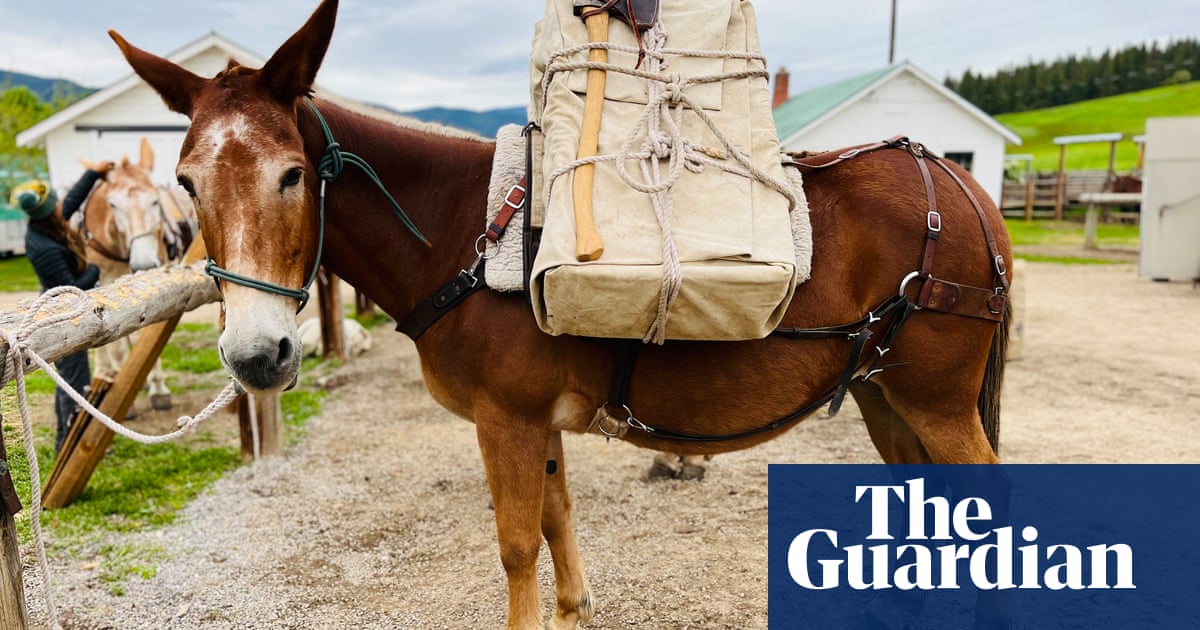
But here’s what you can take along for the ride instead: the humble mule.
A map to Lena lake, and the Shaw cabin, built in 1928.
The law – a visionary act of environmentallegislation for its time – banned modern transportation, including bikes, but made an exception for animals with hooves.
It’s easy for the general public – weekend warriors and summer hikers alike – to forget that those wilderness areas need serious upkeep. Trails need to be kept clear of fallen trees. Bridges and ranger cabins must be built and taken care of. This is where mules’ ability to carry loads really shine.
Map of Montana, with the Bob Marshall Wilderness Complex colored in red.
The backcountry is not a universe of convenience or comfort. But there’s freedom to be found there. Wanting to witness it myself, I contacted the Bob Marshall Wilderness Foundation, a non-profit that coordinates volunteer groups of public land stewards. Veteran mule packers sign up to train the next generation so traditional skills can be passed on.
I called their program director, and asked if I could tag along.
“Do you know how to ride a horse?”
“Not really,” I answered, sheepishly.
“Well,” she said, “you better take lessons then.”
So I did.
‘Stubborn’
Mules have a long list of superpowers – it’s no wonder their nickname is “the four-legged Jeep”.
Because they’re the progeny of a male donkey and a female horse, they benefit from what is known as hybrid vigor, which makes them hardy and disease resistant. They’re sure-footed on uneven terrain, have exceptional peripheral vision and a gait that allows them to carry loads better than other stock animals. They are steady, covering on average three miles an hour. Those attributes make them uniquely suited to long hikes – or “hitches”, in the packing parlance – in the Rockies.
They also tolerate heat exceptionally well – for decades, mules were put to work in the Borax mines of California’s Death Valley, where temperatures climb as high as 125F (51C) in the summer months. And they have a storied history of being first in line to help put forest fires down.
As I listened to their joyful clunking and stared at the line of long fuzzy ears ahead of me, I couldn’t help but think that mules are also quite endearing.
A packer leads a string of mules to Cabin Creek station. The mules carry a week’s worth of supplies for trail volunteers. Photograph: Mackenzie Reiss
For Frank Vitale, the 70-year-old veteran packer who lets me tag along, mules are the perfect pack animals. He particularly respects their intelligence, memory, and instinct: when faced with danger, they usually stop and think, while horses tend to spook or bolt.
He’s keen to highlight the fact that, contrary to stereotype, mules are not stubborn; they just have a strong sense of self preservation. A joyfully biased book called The Natural Superiority of Mules explains it: “A horse can usually be intimidated and forced to do things that he perceives to be senseless or potentially harmful. However, a mule may become ‘stubborn’ when asked to exceed her capacity to perform.” (This is why the Oregon trail was littered with the bodies of horses who were pushed past their limits, yet the same did not apply to mules.)
Frank moved to Montana from New Hampshire 45 years ago because he wanted to see the west. While rugged and more capable than most of us – he wears leather chaps made from an elk he killed himself – there’s an undeniable hippy vibe to him. He often laments how disconnected we are from the natural world. Without a connection to something bigger than us, he believes, we will end up losing ourselves.
Preserving the west’s packing heritage, then, acts as a vaccine protecting the wilderness, with traditional skills as gatekeeper against modern forces (helicopters, heavy machinery) that knock the door open for more destruction.
Frank is keen to pass down his knowledge to the next generation – and the clock is ticking.
This is where Demi Sullivan comes in. At 29, she is one of two apprentice packers this year. A former rafting instructor, she’s used to standing her ground in a world that tends towards the masculine, navigating big muscles and bigger egos. She radiates competency and none of the backbreaking work seems to phase her.
She wakes up at 5.30am and doesn’t stop until the check list is complete. She lifts 70lb hay bales without batting an eyelid, and doesn’t expect you to be surprised at her strength either. As I watch her wrestle with a stubborn mule, I decide I wouldn’t want to take my chances against her in a bar fight.
A mule is loaded with gear at Cabin Creek station in preparation for a 14-mile journey. Photograph: Mackenzie Reiss
She and Frank make a strong team: he’s firm but attentive, and never patronizing. He lets her take risks so she can learn, trusting her to lead the entire mule string.
If the next generation of mule-packers face one hurdle, it’s financial.
First, you need land. This might have been easier decades ago, but decent acreage is now out of reach for most young people. A single working mule costs thousands of dollars. A decent saddle goes for $1,500. A farrier needs to re-shoe the animal every eight to 10 weeks, which will set you back around $120 each time. And of course you need hay, and a lot of it. With the west being in a constant state of drought, feed prices are becoming unaffordable.
Those who keep their eyes on the prize will find a way to make it happen, with a bit of luck. They will continue to apprentice for free; trade or barter; put every single penny they have aside to provide a good life for their animals. All this, for the privilege of crossing a terrain rarely seen by most Americans. For a taste of freedom and self determination, and the comfort that comes with the belief that you are capable of handling yourself and your stock come hell or high water.
An exercise in trust
You do need to have a lot of grit to work in the backcountry. Packing, I learn quickly, is not a job for impostors.
When I attend a mule packing class at the historic Nine Mile Ranger station near Missoula earlier this spring, I hear plenty of intimidating stories. A person was bitten on the shoulder so hard that it tore open their muscle. Another got kicked in the face and had to be helicoptered out of the backcountry. A ranger referred to his many kicking scars and bruises as his “mule tattoos”.
A mule’s head alone weighs more than 200lb. If you’re unlucky enough to stand in its way, you can kiss your front teeth goodbye. One second is all it takes for a mule to knock someone flat; a single kick to your leg can break bones.
The only way to avoid a worst-case scenario, explains lead packer Robin Connell, is to always keep safety in mind and build a relationship with your animals. Packing is a conversation, an exercise in trust.
No mechanical equipment is allowed in the Bob.
This point is brought home to me very quickly on my first hitch. As Demi leads the string of mules and cajoles the pack into crossing a waterfall on a sharp trail turn, one of the mules trips. I hold my breath as I watch the animal struggle to find its feet, wondering if it is going to tumble down the cliffside to its death.
The mules behind do an immediate U-turn and start running towards Frank and me, who were at the back of the pack. Mayhem ensues, and the only reason no mule or human was injured isthat the animals came to their senses and trusted the team to calm down and keep going.
We eventually manage to complete our mission: to pack material and food for a group of five trail volunteers.
The trail volunteer is composed of a ragtag group of fresh-faced 19-year-olds, all of whom can talk about climate change with more passion and clarity than most politicians.
One of them, Issac Slevin, explains their week so far: they widened and evened out 525 yards of trail by carving into the mountainside with pulaskis and picks (remember, no mechanical tools allowed), starting at 6am each day. They also used handsaws and crosscut saws to clear fallen trees. On a good day, they can clear 70 small trees; on a difficult day, they stand in front of an imposing 2ft-wide one, which guarantees a very sweaty morning of hard labor.
An escape from the modern world
There’s another benefit to packing up your life for a few days in the backcountry on top of mules: perspective.
At 88 years old, after spending an estimated 22 years of his life sleeping outdoors, Smoke Elser, the uncontested titan of the packing world, is now begrudgingly retired. During his career, he taught Navy Seals and FBI agents how to work efficiently with mules to track fugitives in remote landscapes, or in war zones. (Mules were widely used by the Allied forces during the first and second world wars, and some were sent to Afghanistan by the US in the war against the Soviet troops in the 1970s and 1980s.)
Still, Smoke worries packing will soon become a lost art – and for this reason, cannot seem to stop teaching. He helps host a wilderness and packing class led by Eva-Maria Maggi at the University of Montana.
Call of the wild: the Mission Mountains. Photograph: Aaron Agosto
Frank says that to be able to break away from technology for days at a time is critical to his sanity. “When I get too old to put my foot in the stirrup and swing into the saddle,” he once said, “I’m going to make one request: just wheel me up to the edge of the wilderness so I can look in one more time to a place and a time where I found true freedom.”
Likewise, Smoke argues that traversing the wild country “helps us escape from the fast pace of our modern world, with its mania for efficiency”. When asked once what advice he would give young people to live a good life, his answer was simple:
“Pack up a sleep bag, and get with somebody who’s been [in the backcountry] lots of time, man or woman. Go on a trip with them with a horse, and listen to their life story,” he said.
“Then take another trip by yourself, and have a vision. Go sit by a big ol’ ponderosa pine, a stream or on top of a rocky mountain, and just think: what am I gonna do with the rest of my life? This is just the first day of the rest of my life. No better place to do with nobody around, no beep beep beep of the telephone … Just you.”
Perhaps going slow is all the medicine the world needs right now.
The Bob Marshall Wilderness Complex is located on the ancestral lands of the Amskapi Piikani (the Blackfeet Nation of Montana), the Niitsítapi (the Blackfoot Confederacy), the Séliš (Salish), Ql̓ispé (Pend d’Oreille or Kalispel), and Ktunaxa (Kootenai) tribes.
Thanks for visiting our article Keeping it wild: how mules help preserve the last untamed places in the US | Environment | The Guardian. Please share it with responsible.
Source: news.google.com
Keeping it wild: how mules help preserve the last untamed places in the US | Environment | The Guardian. There are any Keeping it wild: how mules help preserve the last untamed places in the US | Environment | The Guardian in here.
These Are the 3 Most Searched Decor Styles Across the U.S. This Year
The middle of the year provides an exciting opportunity: It’s the perfect perch to look both to the past and the future. After June, we’re able to assess the first six months of the year knowing there’s still equal time for the culture to shift before defining an era.
With that in mind, we thought it appropriate to survey the most popular decor styles from the first half of 2022. Using data from Google, AD pulled together the most-searched interior styles from the past six months in 26 major cities across the U.S. Not only do these trends give us insight into what the country is liking, but they also show the impact geography and local culture can have on our tastes.
Content
This content can also be viewed on the site it originates from.
Modern farmhouse, farmhouse, and boho were the most-searched design styles during the first half of 2022.
So far, the most popular style in the states has been some iteration of the farmhouse aesthetic, whether the modern farmhouse that was favored in Chicago, Seattle, San Antonio, and Charlotte or the classic farmhouse that made its mark on Houston, Dallas, Fort Worth, Washington DC, Phoenix, Denver, and Riverside. This look could easily be summarized in one word: charming. Usually, homes will include a hearty mixture of rustic elements like reclaimed wood or shiplap with big, cozy furniture. The modern take on the style often features white walls and a generally more neutral palette to create a cleaner, more contemporary feel.
Boho was well-loved along both the East and West Coast and was the most searched style in New York, Boston, Baltimore, Philadelphia, San Francisco, San Diego, and Los Angeles. While this look is often linked to fringe-loaded, flower crown-wearing Coachella goers, in interiors, the style is better characterized as an eclectic departure from rigid rules. Generally, these homes use a varied color palette, mixed earthy neutrals, rich jewel tones, and vibrant hues. To get the perfect boho look, you’ll want to couple an array of vintage decor and goodies with timeless furniture to anchor the space. Residents in Tampa, St. Louis, and Atlanta were also interested in the aesthetic, showing the style is creeping its way into the midwest and south too.
While some other styles came up—midcentury modern in Portland, modern in Las Vegas, minimalist in Detroit, and beach in Miami—the dichotomy between the two most popular aesthetics opens up an interesting conversation. Farmhouse style (even with modern additions) embodies nesting, planting roots, and going back to some metaphorically simpler time. Boho, on the other hand, looks outward and collects different ingredients from all corners of history and the world, bringing them into one encyclopedic space.
Perhaps America’s interest in the two styles highlights two different—though equally valid—responses to the continued impact of the pandemic. Farmhouse lovers doubled down on the meaning of home, reinvigorating the beauty in creating your own pocket of the world, while those who favored a boho look ached to explore again, fired through a burning sense of wanderlust. Looking toward the future, these trends show us that our homes will likely continue to be a reflection of the exterior world and, like everything, they’ll evolve as time goes on. Still, we’ll have to wait a few more months to determine what else may impact the style of 2022 before capping off the year.
Thanks for reading our article These Are the 3 Most Searched Decor Styles Across the U.S. This Year | Architectural Digest. Please share it with responsible.
Source: news.google.com
These Are the 3 Most Searched Decor Styles Across the U.S. This Year | Architectural Digest. There are any These Are the 3 Most Searched Decor Styles Across the U.S. This Year | Architectural Digest in here.
US CDC announces reforms after poor COVID response | Coronavirus pandemic News
The head of the top public health agency in the United States on Wednesday announced a shake-up of the organisation, saying it fell short while responding to COVID-19 and needs to become more nimble.
The planned changes at the Centers for Disease Control and Prevention — CDC leaders call it a “reset”— come amid criticism of the agency’s response to COVID-19, monkeypox and other public health threats. The changes include internal staffing moves and steps to speed up data releases.
The CDC’s director, Dr Rochelle Walensky, told the agency’s staff about the changes on Wednesday. It is a CDC initiative, and was not directed by the White House or other administration officials, she said.
“For 75 years, CDC and public health have been preparing for COVID-19, and in our big moment, our performance did not reliably meet expectations,” Walensky told CDC staff.
The Atlanta-based agency, with a $12bn budget and more than 11,000 employees, is charged with protecting Americans from disease outbreaks and other public health threats. It’s customary for each CDC director to do some reorganising, but Walensky’s action comes amid a wider demand for change.
“I feel like it’s my responsibility to lead this agency to a better place after a really challenging three years,” Walensky told The Associated Press.
The agency has long been criticised as being too ponderous and focusing on collection and analysis of data but not acting quickly against new health threats. Public unhappiness with the agency grew dramatically during the COVID-19 pandemic. Experts said the CDC was slow to recognise how much virus was entering the US from Europe, to recommend that people wear masks, to say the virus can spread through the air, and to ramp up systematic testing for new variants.
“We saw during COVID that CDC’s structures, frankly, weren’t designed to take in information, digest it and disseminate it to the public at the speed necessary,” said Jason Schwartz, a health policy researcher at the Yale School of Public Health.
Walensky, who became director in January 2021, has long said the agency has to move faster and communicate better, but stumbles have continued during her tenure. In April, she called for an in-depth review of the agency, which resulted in the announced changes.
“It’s not lost on me that we fell short in many ways” responding to the coronavirus, Walensky said. “We had some pretty public mistakes, and so much of this effort was to hold up the mirror … to understand where and how we could do better.”
Her reorganisation proposal must be approved by the secretary of the US Department of Health and Human Services (HHS). CDC officials say they hope to have a full package of changes finalised, approved and under way by early next year.
Some changes still are being formulated, but steps announced Wednesday include:
Increasing use of preprint scientific reports to get out actionable data, instead of waiting for research to go through peer review and publication by the CDC journal Morbidity and Mortality Weekly Report.
Restructuring the agency’s communications office and further revamping CDC websites to make the agency’s guidance for the public more clear and easier to find.
Altering the length of time agency leaders are devoted to outbreak responses to a minimum of six months — an effort to address a turnover problem that at times caused knowledge gaps and affected the agency’s communications.
Creation of a new executive council to help Walensky set strategy and priorities.
Appointing Mary Wakefield as senior counsellor to implement the changes. Wakefield headed the Health Resources and Services Administration during the administration of US President Barack Obama and also served as the number-two administrator at HHS. Wakefield, 68, started Monday.
Altering the agency’s organisation chart to undo some changes made during the administration of President Donald Trump.
Establishing an office of intergovernmental affairs to smooth partnerships with other agencies, as well as a higher-level office on health equity.
Walensky also said she intends to “get rid of some of the reporting layers that exist” and noted “I’d like to work to break down some of the silos”. She did not say exactly what that may entail, but emphasised that the overall changes are less about redrawing the organisation chart than rethinking how the CDC does business and motivates staff.
“This will not be simply moving boxes” on the organisation chart, she said.
Schwartz said flaws in the federal response go beyond the CDC, because the White House and other agencies were heavily involved.
A CDC reorganisation is a positive step but “I hope it’s not the end of the story,” Schwartz said, noting he would like to see “a broader accounting” of how the federal government handles health crises.
Thanks for visiting our article US CDC announces reforms after poor COVID response | Coronavirus pandemic News | Al Jazeera. Please share it with pleasure.
Source: news.google.com
US CDC announces reforms after poor COVID response | Coronavirus pandemic News | Al Jazeera. There are any US CDC announces reforms after poor COVID response | Coronavirus pandemic News | Al Jazeera in here.
How an untimely double bogey led to this first in U.S. Amateur history | Golf News and Tour Information
It first happened in 1909, when Robert A. Gardner, Charles Evans Jr. and Thomas M. Sherman tied for medalist honors with a 36-hole total of 151 at Chicago Golf Club (Gardner went on to win). It happened again in 1919, when S. Davidson Herron, J.B. Manion and Paul Tewkesbury tied with a total of 158 over two rounds at Oakmont Country Club (Herron went on to win). The third occurrence came 12 years later in 1931, when Arthur Yates, Charles H. Seaver, and John E. Lehman tied at 148 at Beverly Country Club in Chicago. The eventual winner that week was Francis Ouimet, who had previously won the 1913 U.S. Open as an amateur at Brookline, and the 1914 U.S. Amateur at Ekwanok Country Club in Vermont.
Thanks for watching our article How an untimely double bogey led to this first in U.S. Amateur history | Golf News and Tour Information | Golf Digest . Please share it with pleasure.
Source: news.google.com
How an untimely double bogey led to this first in U.S. Amateur history | Golf News and Tour Information | Golf Digest . There are any How an untimely double bogey led to this first in U.S. Amateur history | Golf News and Tour Information | Golf Digest in here.
China Warns U.S. Over Sailing Warships Through Taiwan Strait
China called on the U.S. to refrain from sailing naval vessels through the Taiwan Strait, saying Beijing would take further action in the wake of House Speaker Nancy Pelosi’s visit to Taipei.
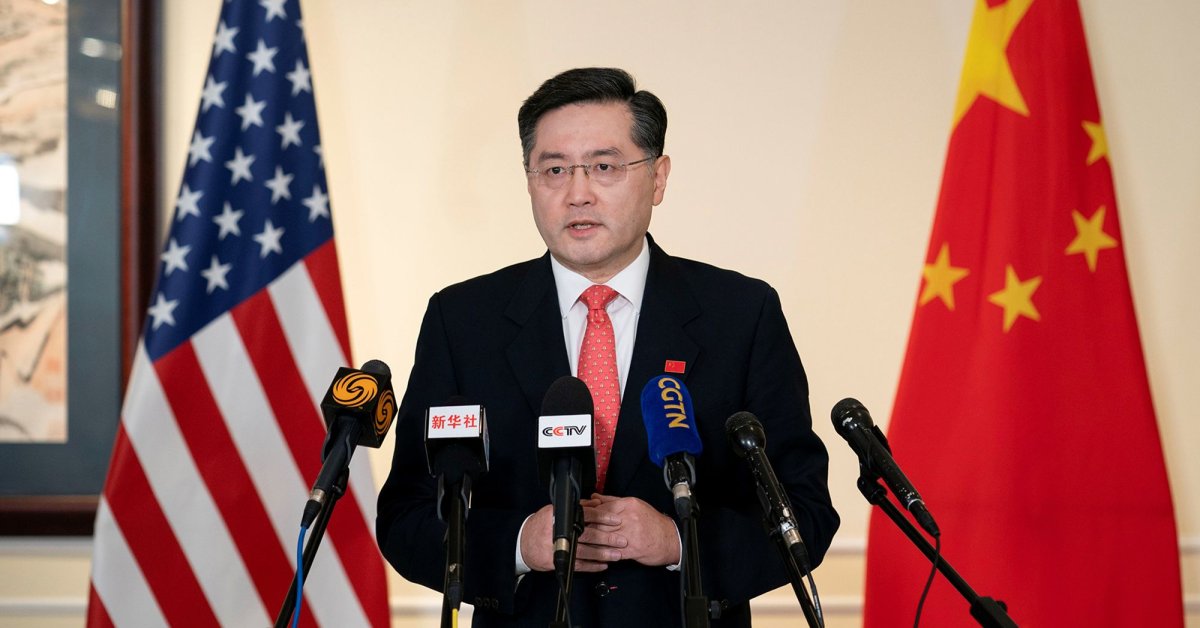
China’s ambassador to Washington, Qin Gang, said Tuesday that China viewed such Taiwan transits as an escalation by the U.S. and an effort to support the “separatist” government in Taipei. He delivered the warning after Senator Edward Markey, a Massachusetts Democrat, wrapped up the second trip to the island in less than two weeks by a U.S. congressional delegation.
“The US side has done too much and going too far in this region,” Qin said in response to a question about potential naval patrols. “I do call on our American colleagues to refrain, to exercise restraint, not to do anything to escalate the tension. So if there’s any moves damaging China’s territorial integrity and sovereignty, so China will respond. China will respond.”
Read More:Pelosi’s Taiwan Trip a ‘Wake Up Call’ for the U.S. and China
The Biden administration has said it would conduct air and maritime transits through the Taiwan Strait after China responded to Pelosi’s trip with a series of military drills around the island, including likely firing ballistic missiles over Taipei. The U.S. has long held that such transits, like congressional visits, are consistent with its “one China” policy not to formally recognize the democratically elected government in Taipei.
The Navy has conducted an average of about nine trips annually through the strait over the past decade, according to data compiled by Bloomberg, far fewer than the “100 navigations” Qin said the U.S.makes each year. The most recent known trip came July 19, when the destroyer, the USS Benfold, sailed through the waterway.
Similarly, Pelosi was only the most senior of 149 members of Congress who have visited Taiwan over the past 10 years.
The Biden administration shouldn’t underestimate China’s resolve on the issue of U.S. congressional visits to Taiwan, Qin said, rejecting White House arguments that lawmakers could act independently. He added that such trips violate the agreements underpinning US-China relations.
“Congress is part of the government of the U.S.— it’s not an independent, uncontrollable branch,” Qin said. “Congress is obliged to abide by the foreign policy of the United States. That’s why we we feel very frustrated and dissatisfied with Senator Markey’s visit to Taiwan. It’s provocative, it’s unhelpful.”
Read More:
There Are No Benefits to a Pelosi Visit to Taiwan
Separately, a bipartisan group of Japanese lawmakers plan to visit Taiwan next week, Kyodo News reported Tuesday, citing people familiar with the matter. The Defense Ministry in Tokyo had previously said that Chinese ballistic missiles landed in what Japan considers its exclusive economic zone after Pelosi’s trip.
Qin defended the Chinese military’s response to the trip, saying the drills were “open, transparent and professional.”
“We are handling a serious fallout from Pelosi’s visit,” Qin told reporters in Washington. He warned the US not to “underestimate the strong resolve, determination and the capability of the Chinese government and the people to defend national sovereignty and territorial integrity.”
Qin also downplayed the threat of an imminent Chinese attack on Taiwan, saying he wasn’t aware of a specific timeline.
“People are over-nervous about it,” he said, adding that speculation China had moved up the timeline for an invasion was “baseless.”
—With assistance from Kari Lindberg, Christopher Anstey and Daniel Ten Kate
More Must-Read Stories From TIME
Contact us at letters@time.com.
Thanks for visiting our article China Warns U.S. Over Sailing Warships Through Taiwan Strait | Time. Please share it with pleasure.
Source: news.google.com
China Warns U.S. Over Sailing Warships Through Taiwan Strait | Time. There are any China Warns U.S. Over Sailing Warships Through Taiwan Strait | Time in here.
Syria denies holding US journalist Austin Tice captive | Media News
The Syrian government has denied holding any American nationals captive, including journalist Austin Tice who was abducted 10 years ago near the capital Damascus.
Syria’s foreign ministry issued a statement on Wednesday in response to United States President Joe Biden’s claims last week that he knew “with certainty” that Tice “has been held by the Syrian regime”, and called on Damascus to help bring him home.
The foreign ministry denied Biden’s accusation, describing it as “baseless allegations”.
“The Syrian Arab Republic denies that it has kidnapped or forcibly disappeared any American citizen who entered its territory or resided in areas under its authority,” the statement said.
The ministry also said that the US had violated consular and diplomatic relations by encouraging US citizens to enter Syria without permission, and that Damascus would only accept “official dialogue or communication with the American administration if the talks are public and premised on a respect for Syria’s sovereignty, independence and territorial integrity”.
A #BringAustinHome” banner, honouring freelance journalist Austin Tice who was abducted in Syria in 2012, hangs outside of The Washington Post headquarters in Washington, DC, on August 9, 2022 [Sarah Silbiger/Reuters]
Tice, a former Marine, was a freelance photojournalist working for Agence France-Presse, McClatchy News, The Washington Post, CBS and other news organisations when he disappeared after being detained at a checkpoint near Damascus on August 14, 2012.
He was aged 31 at the time he went missing. He later appeared blindfolded in the custody of an unidentified group of armed men in a video released a month later but there has been little news of him since.
Biden’s statement on his whereabouts came on the 10th anniversary of Tice’s disappearance.
“There is no higher priority in my administration than the recovery and return of Americans held hostage or wrongfully detained abroad,” Biden said.
The previous US administration under former US President Donald Trump sent a White House official on a rare mission to Damascus in 2020, aiming to seek Tice’s freedom. That mission yielded no visible results.
In 2018, US authorities announced a $1m reward for information that would lead to the journalist’s recovery.
Washington suspended its diplomatic presence in Syria in 2012 at the onset of the country’s civil war.
US Secretary of State Antony Blinken said Biden’s special envoy for hostage affairs, Roger Carstens, would “continue to engage with the Syrian government” in coordination with the White House.
State Department Spokesman Ned Price told reporters on Tuesday that the US government has pushed Syria to return every American citizen.
On Tice’s case specifically, he said, the Biden administration has “engaged extensively – and that includes directly – with Syrian officials and through third parties”.
“Syria has never acknowledged holding him,” Price said of the journalist, adding that “we are not going to be deterred in our efforts. We are going to pursue every avenue for securing Austin’s safe return”.
The Syrian foreign ministry denied in its statement having any secret contacts with US officials on the missing Americans, adding that “any official dialogue with the American government will only be public based on the respect of Syria’s sovereignty”.
Tice is one of two Americans who went missing in Syria. The other is Majd Kamalmaz, a psychologist from Virginia, who vanished in Syria in 2017.
Thanks for reading our article Syria denies holding US journalist Austin Tice captive | Media News | Al Jazeera. Please share it with kind.
Source: news.google.com
Syria denies holding US journalist Austin Tice captive | Media News | Al Jazeera. There are any Syria denies holding US journalist Austin Tice captive | Media News | Al Jazeera in here.
Japan auto lobby says it is concerned about new U.S. law on EV credits
TOKYO, Aug 17 (Reuters) - A major Japanese auto lobby said it was concerned about a new U.S. law that restricts tax credits for electric vehicles to those assembled in North America.
The Biden administration said on Tuesday about 20 models still qualify for tax credits of up to $7,500. Credits end immediately for about 70% of the 72 models that were previously eligible, according to the Alliance for Automotive Innovation, an industry trade group. read more
New restrictions on battery and mineral sourcing and price and income caps take effect on Jan. 1 that will make all or nearly all EVs ineligible, the auto group added.
Register now for FREE unlimited access to Reuters.com
Some major Asian automakers such as Toyota Motor Corp (7203.T) and Hyundai Motor Co (005380.KS) do not currently manufacture electric vehicles in the United States.
"We will keep a close watch on future developments and will consult and consider how to respond to them in cooperation with the government," a Japan Automobile Manufacturers Association spokesperson said.
Toyota referred inquiries to the Alliance for Automotive Innovation, which said the auto industry will continue to work with the U.S. government to promote EV tax credits.
Hyundai declined to comment.
Register now for FREE unlimited access to Reuters.com
Reporting by Satoshi Sugiyama in Tokyo and Heekyong Yang in Seoul; Editing by Edwina Gibbs
Our Standards: The Thomson Reuters Trust Principles.
Thanks for watching our article Japan auto lobby says it is concerned about new U.S. law on EV credits | Reuters. Please share it with kind.
Source: news.google.com
Japan auto lobby says it is concerned about new U.S. law on EV credits | Reuters. There are any Japan auto lobby says it is concerned about new U.S. law on EV credits | Reuters in here.
Indonesia, United States, and Partner Nations Ready for Super Garuda Shield 2022
Indonesia, United States, and Partner Nations Ready for Super Garuda Shield 2022 (State Dept. / U.S. Department of Defense)
Service members from Indonesia and the United States, joined this year by those from Australia, Japan, and Singapore, will participate in exercise Garuda Shield 2022 from August 1 to 14, 2022, at Baturaja Training Area, Amborawang, and Batam Island Training Area in Indonesia.
Garuda Shield is an annual combined and joint exercise between the Indonesian National Armed Forces (TNI) and the U.S. Indo-Pacific Command (INDOPACOM), designed to strengthen interoperability, capabilities, trust, and cooperation built over decades of shared experiences. The 2022 Garuda Shield exercise will be significantly larger in scope and scale than previous exercises, with many nations participating or observing for the first time. In addition to countries actively participating, Canada, France, India, Malaysia, New Zealand, the Republic of Korea, Papua New Guinea, Timor Leste, and the United Kingdom, are expected to join as observer nations.
“I’m proud to see how Garuda Shield has grown since last year – expanding this summer to a joint, multinational exercise that includes all of our service components,” said Gen. Charles Flynn, Commanding General of U.S. Army Pacific. “It’s a symbol of the U.S.-Indonesia bond and the growing relationship between land forces in this consequential region… because land forces are the glue that binds the region’s security architecture together. We do that together by building readiness, building relationships, and by building trust. Bringing our forces together like this, we stitch the fabric of regional security into something lasting.”
The Garuda Shield 2022 exercise, involving approximately 2,000 U.S. troops, 2,000 Indonesian Army soldiers, and additional participants from partner nations, will enhance combined interoperability capabilities through training and cultural exchange. The exercise strengthens the U.S.-Indonesia Strategic Partnership and advances regional cooperation in support of a free and open Indo-Pacific.
The exercise will feature professional and cultural exchanges that strengthen the U.S.-Indonesia partnership through shared learning and training. Trainings, academic exchanges, and professional development workshops focused on the corps-level and below will focus on areas such as humanitarian assistance and disaster relief, as well as combating conventional, unconventional and hybrid threats.
A command post exercise (CPX) will focus on U.N. peacekeeping operation staff tasks in a combined military setting. A field training exercise (FTX) will involve company-strength elements from each nation exercising combined, fundamental war-fighting skills to enhance interoperability and combined operational capacity.
Questions regarding Garuda Shield 2022 should be directed to U.S. Army 7th Infantry Division Public Affairs Officer, Lt. Col. Travis Dettmer at travis.p.dettmer.mil@army.mil and SFC Marcus Butler at marcus.e.butler.mil@army.mil.
By U.S. Embassy Jakarta | 26 July, 2022 | Topics: Press Releases
Thanks for visiting our article Indonesia, United States, and Partner Nations Ready for Super Garuda Shield 2022 - U.S. Embassy & Consulates in Indonesia. Please share it with pleasure.
Source: news.google.com
Indonesia, United States, and Partner Nations Ready for Super Garuda Shield 2022 - U.S. Embassy & Consulates in Indonesia. There are any Indonesia, United States, and Partner Nations Ready for Super Garuda Shield 2022 - U.S. Embassy & Consulates in Indonesia in here.
/cloudfront-us-east-2.images.arcpublishing.com/reuters/FMIUTFTSAFPQRJOYFQFCAOBISY.jpg)
:quality(100)/cloudfront-us-east-1.images.arcpublishing.com/thesummit/MXMYWNABZBBXVE5GKYH7OBH4SA.jpg)





/cloudfront-us-east-2.images.arcpublishing.com/reuters/7KKSYPYFHJJ63JERPULFUAJFBI.jpg)

