Never End News


Opinion: Trump is worried after FBI search -- and he should be

Norman Eisen is a senior fellow at the Brookings Institution. He was former President Barack Obama's ethics czar and was special impeachment counsel to the House Judiciary Committee in 2019-2020. Asha Rangappa is a senior lecturer at Yale University's Jackson Institute for Global Affairs. She is a former special agent in the FBI, specializing in counterintelligence investigations. Dennis Aftergut is a former federal prosecutor, currently of counsel to Lawyers Defending American Democracy. The views in this commentary belong to the authors. View more opinion at CNN.

(CNN)A week of stunning developments for the possible criminal liability of former President Donald Trump and his circle was capped off with this weekend's news that a Trump lawyer had signed a statement this summer saying that all material marked as classified in the former President's possession had been returned. Together with earlier revelations, this latest piece of the puzzle points us to the direction in which the Department of Justice is headed -- and when.

First, with the search warrant at Trump's Mar-a-Lago residence now public, it shows the possibility of alleged crimes that are significant. The warrant is based upon probable cause to believe, first, that taking large quantities of materials to Mar-a-Lago violated the core federal criminal document preservation statute related to presidential records. It forbids the willful concealment, removal, or destruction of documents -- classified or not -- belonging to the government of the United States. The maximum penalty is three years' imprisonment.
More serious still is the possible violation of the federal Espionage Act, also listed on the warrant. Its violation carries a maximum penalty of 10 years in prison. Individuals are subject to conviction under the act if they willfully retain and fail to deliver information "relating to the national defense" upon the demand of a federal officer entitled to receive such information that has come into the individuals' possession.
This statute comes into play because the FBI retrieved 11 sets of classified documents from Mar-a-Lago last Monday. Information is marked "secret" if its unauthorized release would cause "serious damage to national security." Information that would cause "exceptionally grave damage to national security" is marked "top secret." If information is marked "TS/SCI," it is even more highly protected -- "top secret/sensitive compartmented information," meaning that it comes from sensitive sources or methods.
In short, while all the material recovered could be considered stolen government property, the classified documents that the FBI retrieved and that were marked "top secret" and "various classified/TS/SCI" are of special concern. Although the Espionage Act does not require that "information related to the national defense" be classified, these highly sensitive documents would likely fall under the definition of "information relating to the national defense" under the Espionage Act.
Finally, there is the offense of obstructing a pending federal investigation by concealing documents relating to that investigation. It carries the heaviest potential penalty: up to 20 years in prison. As grave as violations of the first two statutes are, interfering with a Justice Department investigation is especially serious.
Trump has denied all wrongdoing and claims the investigation is politically motivated.
Reporting has already detailed the concerning pattern of document turnover. It started with negotiations and voluntary requests from national archivists in 2021, resulting in the return of 15 boxes of materials in 2022. That was followed in the spring by a grand jury subpoena evidently compelling production of documents. Then investigators visited in June, taking still more documents with them and at some later point securing the recently reported, evidently false statement that all material marked as classified had been returned.
Neither that subpoena nor the lawyer's June delivery produced the 11 sets of classified information that the FBI said it took from Mar-a-Lago last week.
The warrant's release explains what Attorney General Merrick Garland was talking about on Thursday when he spoke of the "standard practice to seek less intrusive means" than a search warrant whenever possible. He was telling us that the Justice Department tried everything else (and then some) first.
Note that if Trump or others did not honestly comply with the subpoena, that's a separate possible crime. That might be why the department reportedly subpoenaed the surveillance footage of people going in and out of the document rooms. Government officials were also understandably concerned about who had access to classified documents.
Further, if Trump and those around him, including his lawyers, made intentionally inaccurate statements to the government, they may be criminally liable for making false statements.
While this new report on a lawyer's letter casts added light on the situation, gaps necessarily remain. As is standard operating procedure, the Justice Department has not released the FBI agent's sworn affidavit supporting the search warrant. Such affidavits, and the evidence they contain, are closely held until soon after the DOJ files any criminal charges.
Disclosing affidavits prematurely can give away the government's case and inform targets what investigatory routes they need to block, what evidence to destroy and what potential witnesses' cooperation they need to forestall. That is why Garland should hold firm despite demands from some of the former President's allies in Congress to see the affidavit.
The ordinary reasons apply with even greater force in a case involving exceptionally sensitive national security data and a highly confidential informant. In our current, hyper-charged political environment, when an armed follower of Trump's social media site enters a Cincinnati FBI office with an apparent intent to kill, any public information on a reported Mar-a-Lago informant could easily put that person's life in danger.
Still, Garland has adeptly brought the picture into focus with his properly terse statement and release of the warrant -- while complying with the DOJ's stringent rules on what can and cannot be said. We shouldn't take the attorney general's integrity and prosecutorial experience for granted. After all, we just had Bill Barr, whose distortions as attorney general of the Mueller report may have emboldened Trump's belief in complete personal impunity from legal consequences. In the Nixon era, we had enabling Attorney Generals John Mitchell and Richard Kleindienst, both of whom were convicted of crimes
Given Garland's care to follow the rules, we are going to have to be satisfied with his disclosures for a while. We are now in the window Garland laid out in his recent memo about the DOJ avoiding any actions that could be perceived as affecting an election before it takes place. (Although the window is often referred to as a three-month one, the memo is silent as to the actual number of days.)
Trump remains one of the most polarizing characters in American politics, and any action taken could have an impact on the midterm elections. That is so even though Trump has not declared his candidacy for 2024 and is not on any ballot.
The accumulation of allegations adds to the chances that Trump might be charged. It's not just the possible removal of documents, or even the more serious national security ones. It's that documents appear to have been withheld again and again.
Moreover, Garland's moves last week were not necessarily just about potential document crimes. As an earlier overview explained, the DOJ can use anything found pursuant to the search warrant to prove other possible crimes.
There are three fronts on which federal criminal investigations are likely to proceed, quietly before November but perhaps more loudly afterward: alleged document crimes, conspiracy to defraud the United States by seeking to overturn the 2020 election before January 6, 2021, and obstruction of Congress on January 6.
On Sunday, Trump may have dropped a hint that the FBI seized information related to the latter two. He complained on his site, Truth Social, that the FBI "took boxes of 'attorney-client' material, and also 'executive' privilege material which they knowingly should not have taken." We know that attorney-client and executive privilege arguments have loomed large in the January 6 investigations. Time will tell whether the FBI also swept up information relating to additional matters separate from the removal of classified documents.
Trump's groundless caterwauling this past week proves he's concerned about possible prosecution. He should be. There are just too many ongoing investigations to think that he can dodge them all.
Thanks for visiting our article Opinion: Trump is worried after FBI search -- and he should be - CNN. Please share it with responsible.
Source: www.cnn.com

Opinion: I saw the terrifying attack on Salman Rushdie, a man who lives with danger and chooses to thrive

Lydia Strohl is an award-winning freelance writer based in Washington, DC. She has just completed her first novel, "Where I Left Them." Her work can be found at www.lydiastrohl.com. The views expressed in this commentary belong to the author. View more opinion at CNN.

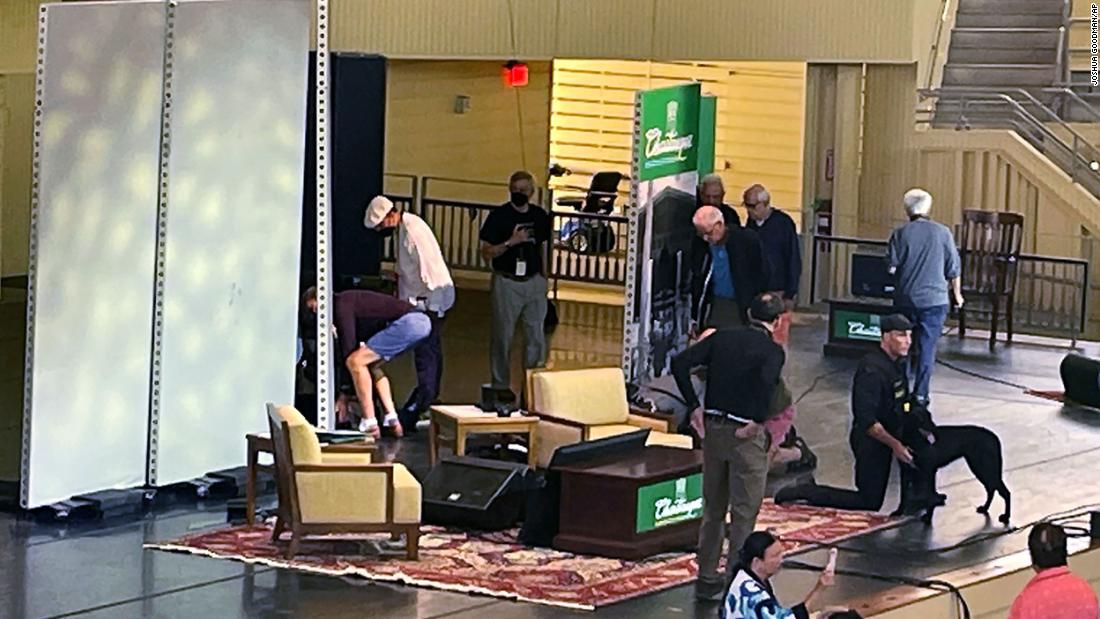
(CNN)Friday, August 12, 10:40 a.m. I park my bike in a gravel patch near the Chautauqua Amphitheater, wedging a rock beneath the kickstand so it will not fall. The woman who checks my ticket at the gate is accompanied today by a state trooper and a police dog -- not usual for this rural arts community, but warranted: today's speaker, Salman Rushdie, has lived under threat since his book, "The Satanic Verses," was published over three decades ago. I zigzag my way down steep stairs to the floor, noticing another trooper standing guard.

Minutes later, Rushdie and Henry Reese walk onstage, set to discuss the US as an asylum for writers and other artists in exile as part of the Chautauqua Lecture Series. The audience rises, clapping. I realize Rushdie will be seated with his back to me, so I move to get a better view, starting down the middle aisle to an empty seat in the third row just as the two take their seats.
Before I take mine, however, a man leaps onstage, hate on two feet, storming Rushdie with lightning speed. The author rises and steps back to evade him, but his black suit and polished shoes are unprepared for the youth in trainers, head wrapped like a ninja, a cyclone of anonymous fury.
Rushdie bends and twists away but the knife is unrelenting, arm raising and falling over and over and over, evading the author's hands and those attempting to intervene. The crowd, gathered at a stage where civil discourse has been practiced for over 130 years, stands watching, frozen not with fear but with shock. After what seems like ages but I later learn was just seconds, the attacker is taken down by a few men and a state trooper. Rushdie and Reese have both fallen. Blood pools on the stage. A man runs by me, filming the chaos on his phone.
"These are not good days for liberty. If you look around the world, you see that the idea of freedom, freedom which contains a sense of carefree-ness, seems everywhere in retreat, hounded by guns and bombs," Mr. Rushdie told an audience at Emory University in 2015.
How ironic, that his attacker moved through tree-lined streets where children run free until peals from a bell tower remind them it is time for dinner, where bicycles are not locked and wallets are often returned with cash intact. This is a place where people let down their guard, only too easily. That is part of the charm, but in the days to come, we will surely grapple with that.
The crowd is mostly silent, except for the jagged cries some cannot, do not, still. The attacker is finally subdued, and the police dog stands over him. I wonder if it's ghoulish to take a picture of the stage at this moment. But the ghoul is already here, I decide. Rushdie lies still on his back; someone has removed his shoes from his feet and lined them neatly beside him, waiting for him to fill them again. No one else can.
I cannot get back on my bike for shaking, so I walk home. Sirens wail.
By around noon, The New York Times has reported Rushdie was stabbed in the neck, with another witness saying he still had a pulse before he was airlifted to a hospital. I am astounded and relieved that he survived. When Ayatollah Ruhollah Khomeini, the supreme leader of Iran, issued a call for his death in 1989, the author went into hiding, but continued to write his intricate and zany books. He says he must write to survive, or his dreams become increasingly crazy. Waiting for news, I wonder how much crazier a dream can get than this, more nightmare than fairy tale.
Texts pour in: "Are you there?" "Is it true?" A friend tells me she attended a dinner with Rushdie in February, and remembers him saying he was fairly certain someone, somewhere, would get him. Who knew this could happen in this utopian summer community, which tries to combat the dissension in the world with conversation. Words were no match today.
Later in the afternoon, Andrew Wylie, Rushdie's agent, reports he is in surgery but has no other updates.
"What is freedom of expression? Without the freedom to offend, it ceases to exist," Rushdie famously said. In Manhattan, where he now lives, he often appears in public without security. "Oh, I have to live my life," he told an interviewer last year.
I begin to re-read Rushdie's writing, seeing the ways he seeks to prove that our differences do not define us, a thread through my own work. In his words: "This may be the curse of human race. Not that we are different from one another, but we are so alike."
"Are you ok?" reads the text chain. "Not really," I reply. We meet, hug, walk the streets laced with new autumn leaves, documenting the emergency vehicles, the crime scene tape.
Everywhere we pass, people are gathered on porches, refreshing the news on their phones, waiting to hear of Rushdie's condition. It is a gorgeous day, the sun with that almost-fall golden tinge that produces a long shadow. Like 9/11, we say. We will all remember where we were on this day.
Hours later, Rushdie is still in surgery. The world waits. His attacker's name is known. He bought a gate pass to the grounds of Chautauqua Institution.
There I am in a video posted on Twitter, standing in front of the attack in a striped shirt, on my phone. I remember that I dialed 911. I did not know what else to do. I realize I still don't.
That night, his agent says he is out of surgery, but "the news is not good." He is on a ventilator. The nerves in his arm have been severed, his liver stabbed and damaged. And he is likely to lose an eye. Is this really the civilized world? When I think of the terror of this day, I think of living with this danger and choosing to thrive. It's a choice we all have to make, now. Pray -- or whatever gesture you make to your god -- for him. Pray for peace. Pray for us all.
Thanks for reading our article Opinion: I saw the terrifying attack on Salman Rushdie, a man who lives with danger and chooses to thrive - CNN. Please share it with pleasure.
Source: www.cnn.com

Opinion: The GOP is taking aim at the FBI

Dean Obeidallah, a former attorney, is the host of SiriusXM radio's daily program "The Dean Obeidallah Show" and a columnist for The Daily Beast. Follow him @DeanObeidallah. The opinions expressed in this commentary are his own. View more opinion on CNN.

(CNN)Former President Donald Trump's GOP allies in Congress were only too eager to defend their leader after learning last week that the FBI had carried out a court-authorized search of his Mar-a-Lago property in Florida.

Echoing Trump's assertions that the search was politically motivated, the former President's acolytes unleashed a tsunami of attacks against the federal officials and agencies responsible for carrying it out.
Rep. Marjorie Taylor Greene of Georgia demanded that the FBI be defunded. Sen. Marco Rubio of Florida equated the lawful search with "something we have seen many times from 3rd world Marxist dictatorships."
Rep. Elise Stefanik, the third-ranking Republican in the House, slammed the search as "un-American." And House Minority Leader Kevin McCarthy decried on Twitter what he called the Justice Department's "intolerable state of weaponized politicization" under the leadership of Attorney General Merrick Garland.
McCarthy even vowed that if Republicans regain control of the House in November's midterm elections, Garland would be dragged up to Congress to explain his actions, ordering the attorney general in the same tweet to "preserve your documents and clear your calendar."
But where was the GOP outrage when a body armor-wearing man carrying a firearm and described in some reports as devoted to Trump attempted to attack an FBI field office last week in Cincinnati?
News reports said the man fired a nail gun in the FBI office, but that no one was injured. Officers later shot and killed the suspect during a police chase.
That same individual -- who was also said to be among the Trump supporters at the US Capitol during the violent January 6, 2021, protests -- is believed to have posted angry social media posts toward FBI agents for having searched Trump's Florida home.
Meanwhile, the search warrant released on Friday showed that national security documents were among the items agents were looking for at Mar-a-Lago, leading some Trump backers to mute their criticism of the FBI.
Why aren't GOP leaders as outspoken in condemning those who have contributed to an "unprecedented" number of threats against the FBI -- including the two agents who signed the search warrant -- ahead of last week's search of Trump's property?
The judge who signed the warrant authorizing the search of Mar-a-Lago has been subjected to an onslaught of online antisemitic attacks. Some threats were so alarming that the Florida synagogue where the magistrate serves on the board of trustees canceled its Friday services as a precaution. Where is the GOP outrage about that?
As of Monday, there had been not even one tweet from McCarthy denouncing the attack in Cincinnati on the FBI, the spike in threats directed at FBI agents or the vile death threats against the judge. We reached out to McCarthy's office for comment but didn't hear back.
This silence is in sharp contrast to how the Republican House leader reacted in June after an armed man was accused ofthreatening Supreme Court Justice Brett Kavanaugh. (The suspect was indicted on a single charge of attempting to assassinate a justice of the United States, which carries a maximum sentence of life in prison. He has pleaded not guilty in the case.)
McCarthy, in his speeches on the House floor, in media appearances and on Twitter, denounced the threats against Kavanaugh and demanded swift action to protect the Trump-appointed justice.
Meanwhile, the baseless and dangerous attacks on the FBI and the federal judge who authorized the search warrant are being alarmingly amplified by the GOP's media allies. For example, Fox News host Mark Levin declared on Sean Hannity's Fox News show last week that the FBI search warrant is "the gravest attack on our republic in modern history."
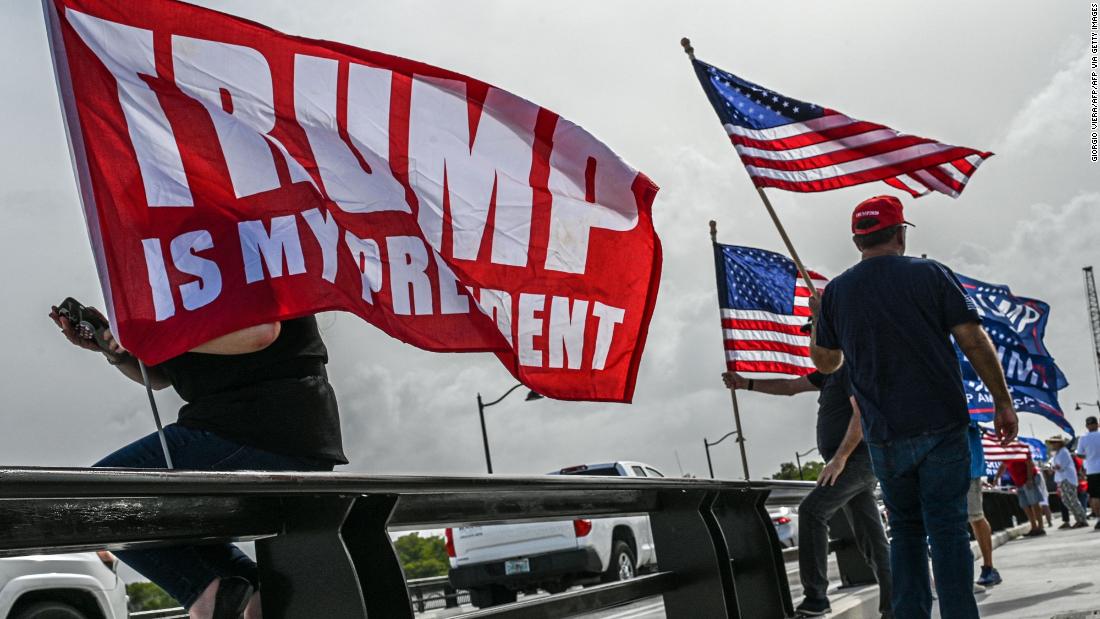
The potential for political violence is not close to ending, including that fomented by Trump. Despite the attack on the FBI's Cincinnati office, the former President took to his social media site, accusing the bureau of being "corrupt" and suggesting the FBI planted top secret materials and other classified documents found on his property.
Before January 6, we could dismiss Trump's conduct as simply an attempt to distract from allegations or perhaps to give red meat to his base. But we all saw that after the 2020 election, Trump trafficked in nonstop lies that the election was "stolen" -- and a large swath of his supporters believed him. And some of those supporters even went so far as to attack our Capitol on January 6 to interfere with the certification of President Joe Biden's victory.
The silence of GOP leaders sends a message that they are angrier at the FBI for conducting a lawful search of Trump's property than with those making death threats against the bureau. In a post-January 6 America, GOP leaders have an even greater obligation to speak out loudly to denounce any violent acts or even threats from their supporters.
They must call a press conference to denounce threats against the FBI and the federal magistrate, telling people they don't even want the votes of those who engage in such conduct. Anything less would be sending a dangerous message that the once proud law and order party tolerates -- and perhaps even supports -- the use of violence to acquire and retain power.
Thanks for watching our article Opinion: The GOP is taking aim at the FBI - CNN. Please share it with pleasure.
Source: www.cnn.com

Opinion: How a virus seemingly returned from the dead

Syra Madad, DHSc, MSc, MCP is an infectious disease epidemiologist, faculty at Boston University's Center for Emerging Infectious Diseases Policy and Research, senior director of the system-wide special pathogens program at NYC Health + Hospitals and is currently responding to the monkeypox outbreak in NYC. She is also a fellow at the Belfer Center for Science and International Affairs. She tweets @syramadad. The views expressed in this commentary are her own. View more opinion at CNN.

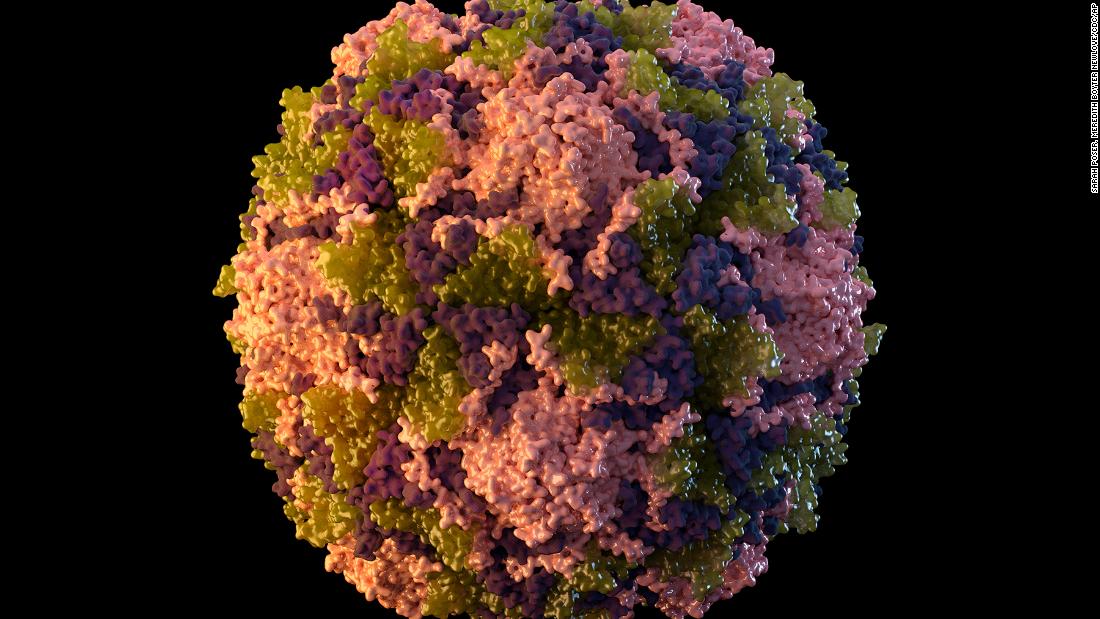
(CNN)New York City has detected poliovirus in sewage, according to state and local health officials, suggesting likely local circulation of the virus. This comes as no surprise since last month a case of paralytic polio was confirmed in a resident in Rockland County -- just on the outskirts of the city. As the state health commissioner Dr. Mary T. Bassett said, "For every one case of paralytic polio identified, hundreds more may be undetected."

This follows the virus being found in sewage in two neighboring New York City counties -- Rockland and Orange County from samples collected in May, June and July. While no other cases of polio have been reported in the US so far, a senior official with the US Centers for Disease Control and Prevention said on Wednesday that this is "just the very, very tip of the iceberg," suggesting that there "must be several hundred cases in the community circulating."
This is a serious situation. Poliovirus -- a disease eliminated in the US in 1979 is now being detected in three locations in the US. "Polio is entirely preventable and its reappearance should be a call to action for all of us," said the New York CityHealth Commissioner Dr. Ashwin Vasan.
Polio is a vaccine preventable disease and these latest developments should be a warning to us all. Unfortunately, places like Rockland County have an incredibly low polio vaccination rate; 60.5% of two-year-olds are vaccinated compared with the statewide average of 79.1%.
The vaccine to fight the disease has indeed been one of the most celebrated shots in history. Church bells rang out across America and people flooded into the streets to celebrate with parents hugging their children in relief when the vaccine field trial results were announced in 1955 (this is akin to present-day pharmaceutical companies releasing news releases on their vaccine efficacy data).
The celebration was warranted; through vaccination, the US eliminated wild, or naturally occurring, poliovirus more than 40 years ago.
As a parent of three, I can't image living through the daunting threat of polio potentially infecting my children. Before a polio vaccine was made available, some parents were hesitant to even let their child go outside for fear of them being exposed, especially in the summer months when polio seemed to peak.
If we take a trip down memory lane, the worst recorded polio epidemic in the US occurred in 1952 when 58,000 cases were reported. More than 21,000 people were left with mild to disabling paralysis (most victims were children) and over 3,000 people died. What was once a crippling disease was thwarted through mass vaccination.
Polio is a highly contagious virus that spreads through person-to-person contact (most commonly through contact with an infected person's poop). While most people who get infected do not experience any symptoms, about 1 in 4 people develop flu-like symptoms and a much smaller fraction of people (less than one in 100) develop more serious symptoms including paresthesia (feelings of pin and needles in legs), meningitis (infection of the covering of the spinal cord and/or brain) and paralysis. Among those paralyzed, 5% to 10% die when the virus affects their breathing muscles.
Back in the day, even those who did recover faced lifelong challenges. The World Health Organization has reported on some of the disease's consequences: Deformed limbs meant many needed leg braces, crutches or wheelchairs, and some needed to use breathing devices like the iron lung, an artificial respirator invented for treatment of polio patients. To add insult to injury, some children went on to develop post-polio syndrome decades later, which can include muscle weakness, joint pain and feelings of mental and physical fatigue.
But then came the polio vaccine, which provided high levels of protection and through our collective herd immunity, we have been able to fend off the virus (though pockets of vulnerability remain in our communities where there are low vaccination rates).
Wild poliovirus remains endemic in Pakistan and Afghanistan. Though polio cases have decreased worldwide by nearly 99%, the virus remains at large in those two countries and the threat of imported cases of polio continues to exist.
During my trip to Pakistan in 2018, I spoke with officials from Pakistan's National Institute of Health on the importance of biopreparedness for emerging and reemerging infectious disease threats. I remember driving through the ancient city of Multan, where more recently, thousands of Pakistani children were vaccinated against polio in 2020, and thinking how difficult vaccination efforts are in many of these remote areas.
So, it comes as no surprise when public health officials are worried when polio is diagnosed or detected in wastewater surveillance, signaling a larger, local outbreak is occurring. The risk to the public is low as most people are protected from their childhood polio vaccinations. However, people most at risk for infection include those who are unvaccinated or under-vaccinated.
London is facing similar concerns to New York's; poliovirus was discovered in the city's sewage in June. The UK Health Security Agency (UKHSA) has responded with an unprecedented move, and one highlighting the urgency of the situation: Around 1 million children under the age of 10 in London will be offered polio booster vaccines as a precautionary measure. According to Dr. Vanessa Saliba, consultant epidemiologist at the UKHSA, "The areas in London where the poliovirus is being transmitted have some of the lowest vaccination rates."
These latest polio incidents are not one-off events. Immunization coverage is dropping worldwide, and the immunity wall generations past have built is slowly being chipped away. The vaccine distrust that unwarrantedly grew out of the Covid-19 pandemic is only driving more people to opt out of vaccinations or under vaccinate themselves and their children. Others may have paused or delayed vaccination programs due to disruptions caused by the pandemic. The latest report by the World Health Organization shows global immunization coverage -- including the polio vaccine along with numerous others like measles and rubella -- dropped from 86% in 2019 to 81% in 2021.
As the WHO puts it, "as long as a single child remains infected with poliovirus, children in all countries are at risk of contracting the disease. The poliovirus can easily be imported into a polio-free country and can spread rapidly amongst unimmunized populations."
Polio should have been a disease relegated to the pages in our history books. It is human behavior and the choices we make that prevent it from become another lasting public health success story.
Thanks for watching our article Opinion: How a virus seemingly returned from the dead - CNN. Please share it with kind.
Source: www.cnn.com

Away launches Teal colorway and Bucket Bag

If you’re getting ready for the last of the summer holidays and find yourself needing some new luggage, Away’s just launched a brand-new color that’ll put you in the mood for seaside vacations and a new packable bag that’s extremely handy for spontaneous market visits.

The new hue is a teal colorway that is very “waves of Corsica” blue, and it’s available in all of the luggage brand’s suitcase bestsellers and hit packable travel accessories: the Carry-Ons, the checked baggage and packable bags. Think highly foldable sling bags, carry-alls…and that brings us to the next launch.

Away’s added a new packable item to its lineup. The Packable Bucket Bag ($75) boasts a 25-liter capacity and an exterior side zip pocket for at-hand items like boarding passes and phones. Straps and clips allow you to choose between carrying it over your shoulder or carrying by hand. It’s available in black, navy and (yes!) teal.

Shop the Packable Bucket Bag and teal collection now at Away.

Thanks for visiting our article Away launches Teal colorway and Bucket Bag | CNN Underscored. Please share it with kind.
Source: www.cnn.com